
-
(818) 833-8737
13521 Hubbard St.Sylmar, CA 91342
- Login
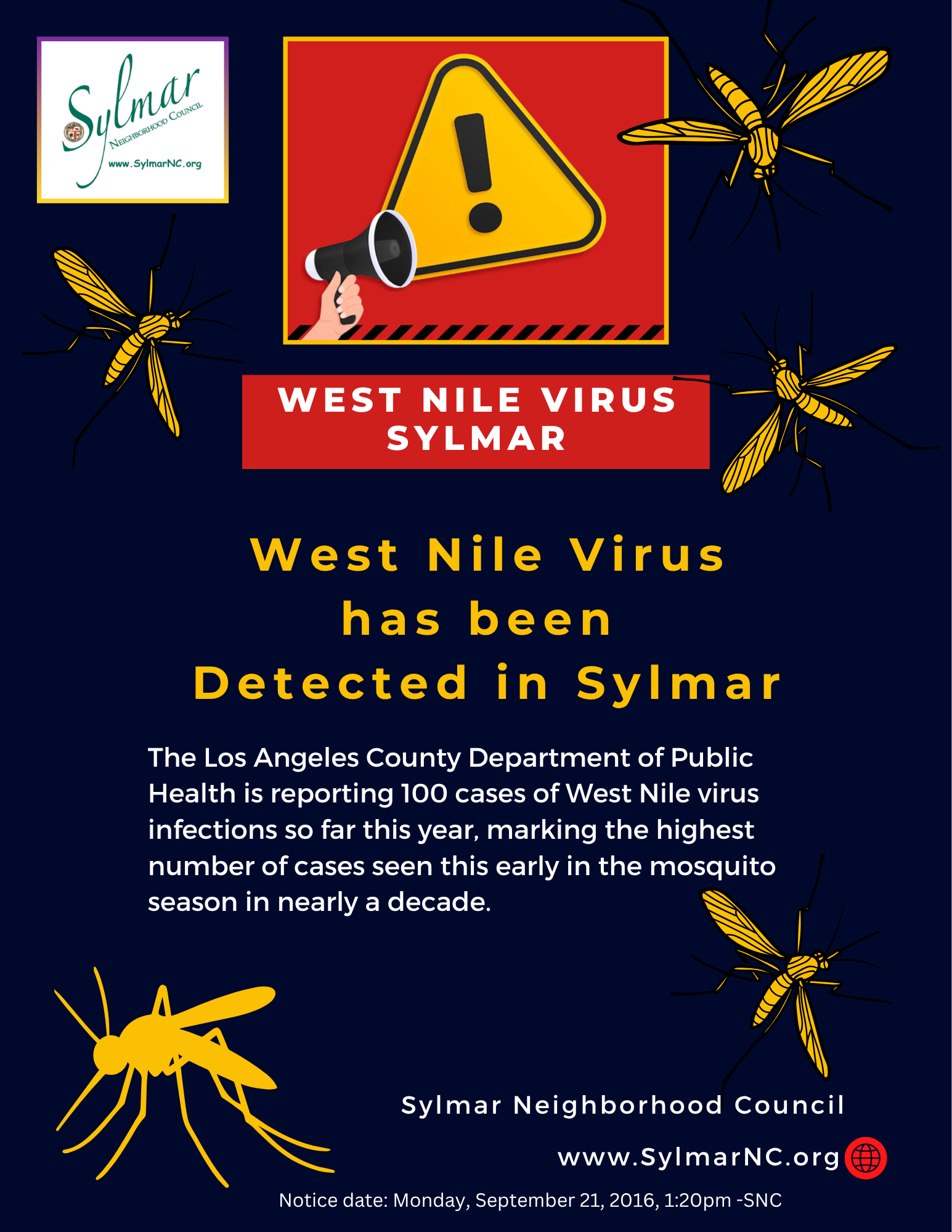
Public Health Reports Highest Number of West Nile Virus Cases in Nearly a Decade
Posted on 09/21/2026
For Immediate Release:
September 21, 2026
NEWS RELEASE
Los Angeles County Public Health
Public Health Reports Highest Number of West Nile Virus Cases in Nearly a Decade
Public Health Urges People to Take Immediate Steps to Prevent the Spread of Mosquito-Borne Illness
The Los Angeles County Department of Public Health is reporting 100 cases of West Nile virus infections so far this year, marking the highest number of cases seen this early in the mosquito season in nearly a decade. With mosquito season still underway, the County is on track for one of its most severe West Nile virus seasons in recent years. The last time case numbers reached this level was in 2017, when 268 cases were reported for the entire season.
Public Health urges people in Los Angeles County to protect themselves from mosquito bites and take steps to eliminate standing water around their homes and other areas where mosquitoes can breed.
Of the cases reported this year, almost all have had severe illness. This is expected because milder infections often go undiagnosed and are not usually reported. These severe illnesses affect the brain or spinal cord, and almost all patients have needed hospital care. Five deaths have been reported. Cases have occurred throughout Los Angeles County.
“West Nile virus can cause serious illness, and the number of severe cases and deaths we are seeing this year is concerning,” said Muntu Davis, MD, MPH, Los Angeles County Health Officer. “We are still within the peak period for West Nile virus transmission, so it is important that everyone take steps now to protect themselves and their families. These include using insect repellent, eliminating standing water where mosquitoes breed, and making sure windows and doors have tight-fitting screens without holes or tears. Small actions like these can make a big difference in preventing illness.”
West Nile Virus in Los Angeles County
West Nile virus is the most common mosquito-borne disease that affects residents in LA County. Public Health reports cases of West Nile virus every year, as the virus is endemic to the region. Peak mosquito season lasts from June to November in LA County.
In collaboration with local vector control agencies, Public Health monitors risk of West Nile virus infection and actively provides information to people about reducing the risk by promoting protective measures against mosquitoes.
“West Nile virus activity is higher than we typically see, and our teams are actively responding with enhanced surveillance, targeted mosquito control treatments, disease investigations, and increased community outreach and education,” said SGV Mosquito District Manager Jason Farned. “These efforts allow us to respond quickly where disease activity is detected, but protecting public health is a shared responsibility. We encourage residents to remain vigilant and take steps to prevent mosquito bites and eliminate stagnant water around their homes.”
Reduce Your Risk
- Wear Mosquito Repellent: Mosquito repellents can prevent mosquito bites. EPA-registered repellents containing DEET, picaridin, IR3535, 2-undecanone, and oil of lemon eucalyptus are the longest lasting and most effective. They are available as sprays, wipes, and lotions. Wearing long-sleeved clothes and pants when outside can also help reduce bites.
- Keep mosquitoes out of your home: Make sure that doors and windows have tight-fitting screens to keep out mosquitoes. Repair or replace screens with tears or holes.
- Prevent mosquito breeding: Eliminate standing water where mosquitoes can lay eggs.
- Clear standing water in flowerpots, saucers, birdbaths and other outdoor containers.Empty items that hold water inside and outside your home once a week. Mosquito eggs only need a thimbleful of water to hatch.
- Cover water storage containers such as buckets and rain barrels. For containers with no lid, use wire mesh with holes smaller than an adult mosquito.
- Clean and maintain swimming pools, spas and drain water from pool covers.
- Throw away old items in your patio or yard that can hold water, e.g., old car tires and children’s toys.
- Call 2-1-1 or click here to find your local vector control agency to report persistent problems to your mosquito control district.
About West Nile Virus
West Nile virus is a disease caused by the bites of infected mosquitoes. The virus survives in nature in several types of birds and is transmitted by the bites of mosquitoes that feed on infected birds. West Nile virus spreads during warm weather months when mosquitoes are most active. While not all mosquitoes carry this virus, the type of mosquito that spreads this virus is found throughout Los Angeles County. Although everyone is at risk for West Nile virus, people over 50 and those with health problems are at greater risk of serious illness, which can include meningitis (brain infection), encephalitis (swelling of the brain) and limb paralysis. There is no specific treatment for West Nile virus disease and no vaccine to prevent infection.
Most people who get West Nile virus don’t have any symptoms. About 1 in 5 people who are infected develop a fever with other symptoms such as:
- headache
- body aches
- joint pains
- vomiting
- diarrhea
- rash
About 1 in 150 people will have severe symptoms that may include high fever, stiff neck, confusion and muscle weakness or paralysis. . Symptoms usually appear 3 to 14 days after being infected. If symptoms are severe, residents should seek medical care right away.
For more information, visit: publichealth.lacounty.
For questions or to find a nearby clinic or doctor, call the Public Health InfoLine at 1-833-540-0473, open every day from 8 a.m. to 8 p.m.
Represent Your Community
FIRE! Be Ready! Tree Dangers

Sign-Up to Receive Agendas

Sylmar Community Calendar

MyLA311


My LA 311
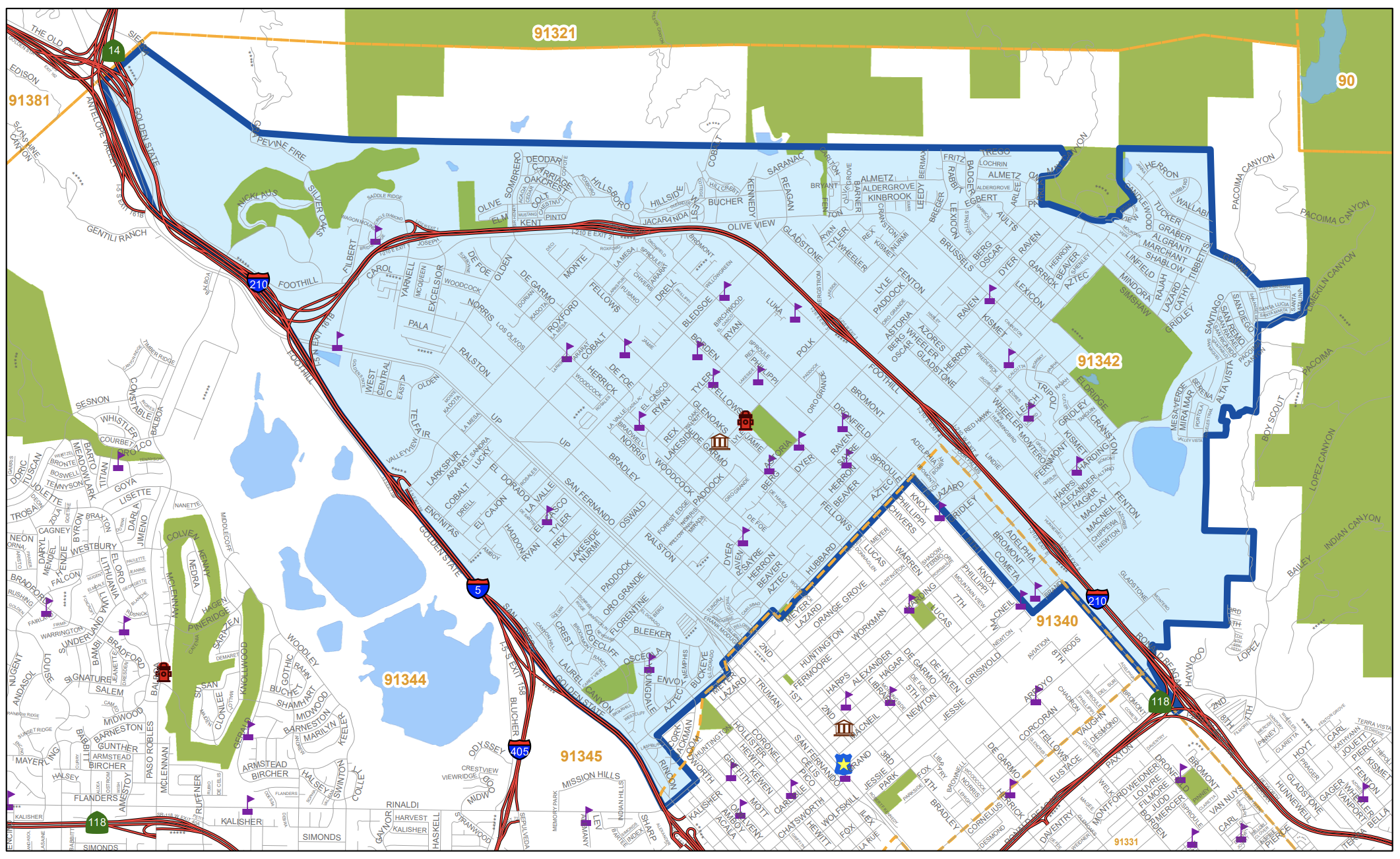
Area Boundaries and Map
View our neighborhood council boundaries for which we deal with.

EMPOWER LA

NEIGHBORHOOD COUNCIL CALENDAR & EVENTS
The public is invited to attend all meetings.
NEIGHBORHOOD COUNCIL FUNDING SYSTEM DASHBOARD
SUBSCRIBE TO NC MEETING NOTIFICATION