-
(818) 833-8737
13521 Hubbard St.Sylmar, CA 91342
- Login
Happy Kwanzaa! - *Habari Gani!
Posted on 12/25/2022

Kwanzaa is celebrated from December 26th, 2022 to January 1st. 2023
What is Kwanzaa?
Kwanzaa is an annual celebration of African-American culture from December 26 to January 1, culminating in a communal feast called Karamu, usually on the sixth day. It was created by activist Maulana Karenga, based on African harvest festival traditions from various parts of West and Southeast Africa.
Kwanzaa is a time of learning, family, and celebration.
During the week of Kwanzaa, families, and communities come together to share a feast, honor the ancestors, affirm the bonds between them, and celebrate African and African American culture. Each day they light a candle to highlight the principle of that day and to breathe meaning into the principles with various activities, such as reciting the sayings or writings of great black thinkers and writers, reciting original poetry, African drumming, and sharing a meal of African diaspora-inspired foods. The table is decorated with the essential symbols of Kwanzaa, such as the Kinara (Candle Holder), Mkeka (Mat), Muhindi (corn to represent the children), Mazao (fruit to represent the harvest), and Zawadi (gifts). One might also see the colors of the Pan-African flag, red (the struggle), black (the people), and green (the future), represented throughout the space and in the clothing worn by participants. These colors were first proclaimed to be the colors for all people of the African diaspora by Marcus Garvey.
On each day of Kwanzaa, a candle is lit for that day’s principal.
• Unity
• Self-Determination
• Collective Work & Responsibility
• Cooperative Economics
• Purpose
• Creativity
• Faith
For more information on Kwanzaa.
National Museum of African American History & Culture.
https://nmaahc.si.edu/explore/stories/seven-principles-kwanzaa
Official Kwanzaa Website.
https://www.officialkwanzaawebsite.org/
*Habari gani? (What's happening?)
In Swahili, the phrase “Habari gani?” means “What's happening?” It was a question asked by village elders to younger members of the community as a way to gauge how they were doing.
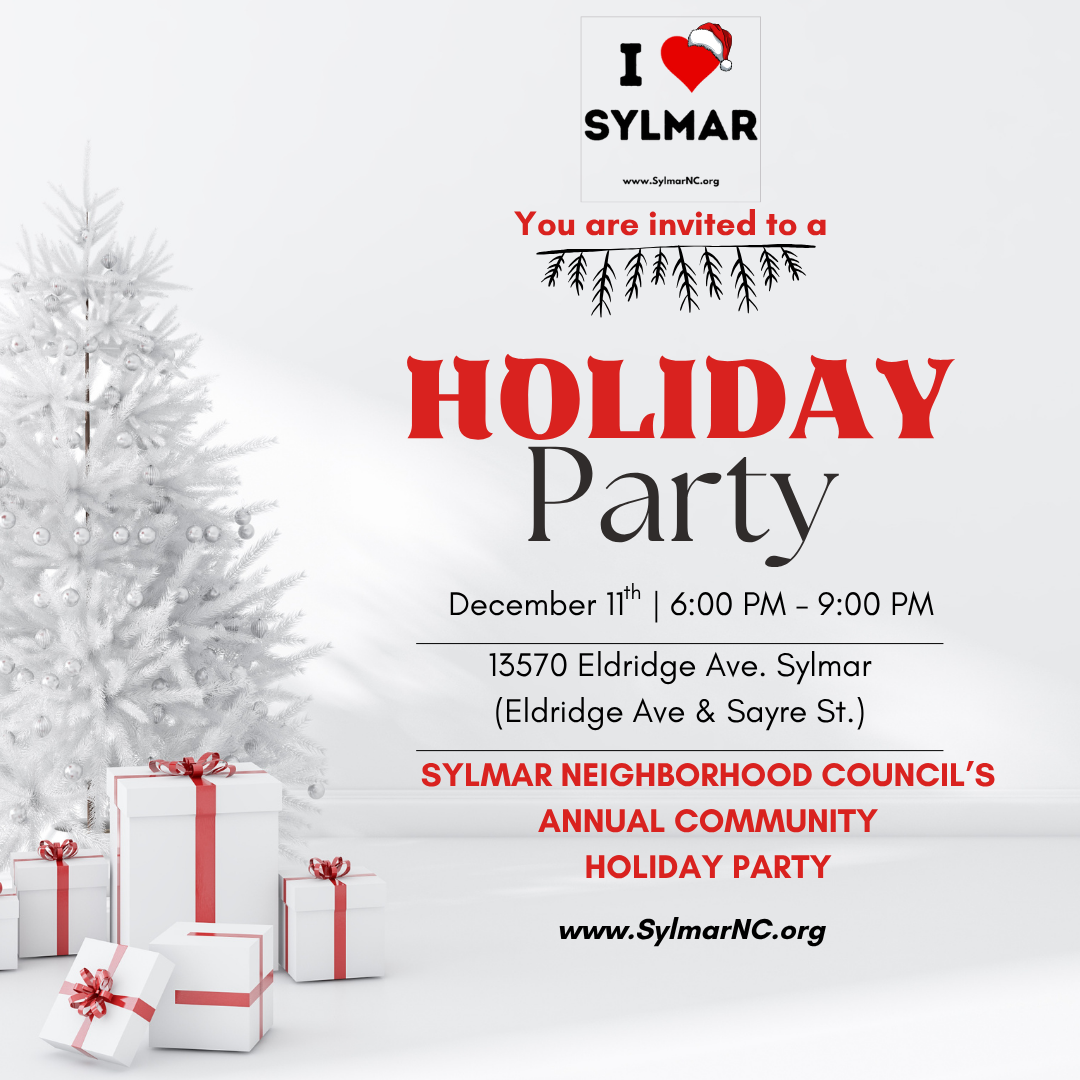
2025 Sylmar Community Holiday Party

Sign-Up • Receive Agendas
Upcoming Meetings & Events
-
Dec17
Cancelled
Equestrian Committee Meeting - Dec17 Free Produce/Food Distribution at Olive View/UCLA Medical Center 9:30am - 11:30am
- Dec18 FREE MOVIE NIGHT AT THE SNC Council Office
- Dec22 Free Produce/Food Distribution at Olive View/UCLA Medical Center 9:30am - 11:30am
- Dec22 Telescope Nights at Sylmar Library
Sylmar Community Calendar
MyLA311

My LA 311
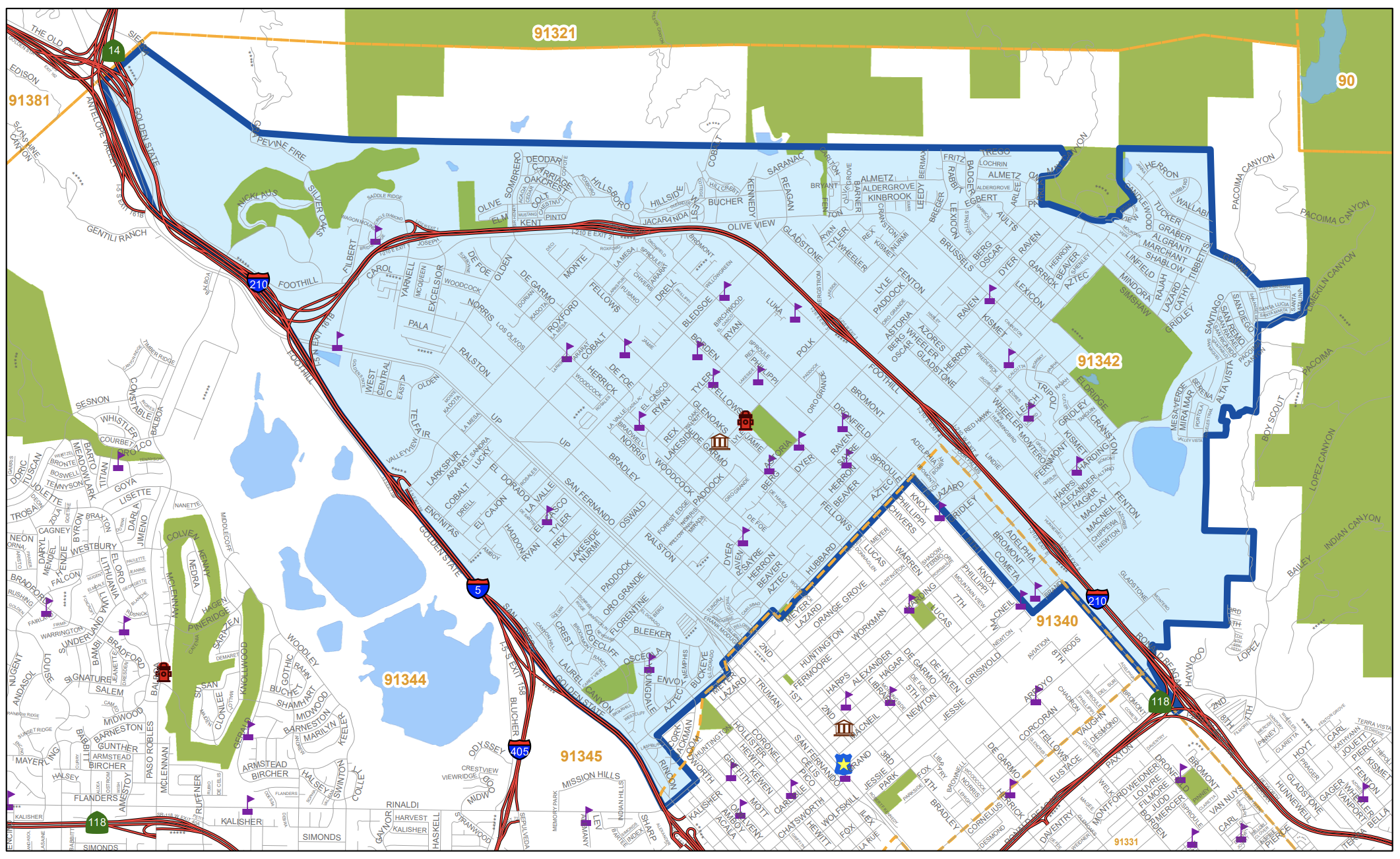
Area Boundaries and Map
View our neighborhood council boundaries for which we deal with.

EMPOWER LA

NEIGHBORHOOD COUNCIL CALENDAR & EVENTS
The public is invited to attend all meetings.
NEIGHBORHOOD COUNCIL FUNDING SYSTEM DASHBOARD
SUBSCRIBE TO NC MEETING NOTIFICATION

Los Angeles Open Data Portal
© 2025 Sylmar Neighborhood Council.