
-
(818) 833-8737
13521 Hubbard St.Sylmar, CA 91342
- Login
Food Safety & Possible Reimbursement due to Power Outage
Posted on 01/11/2025
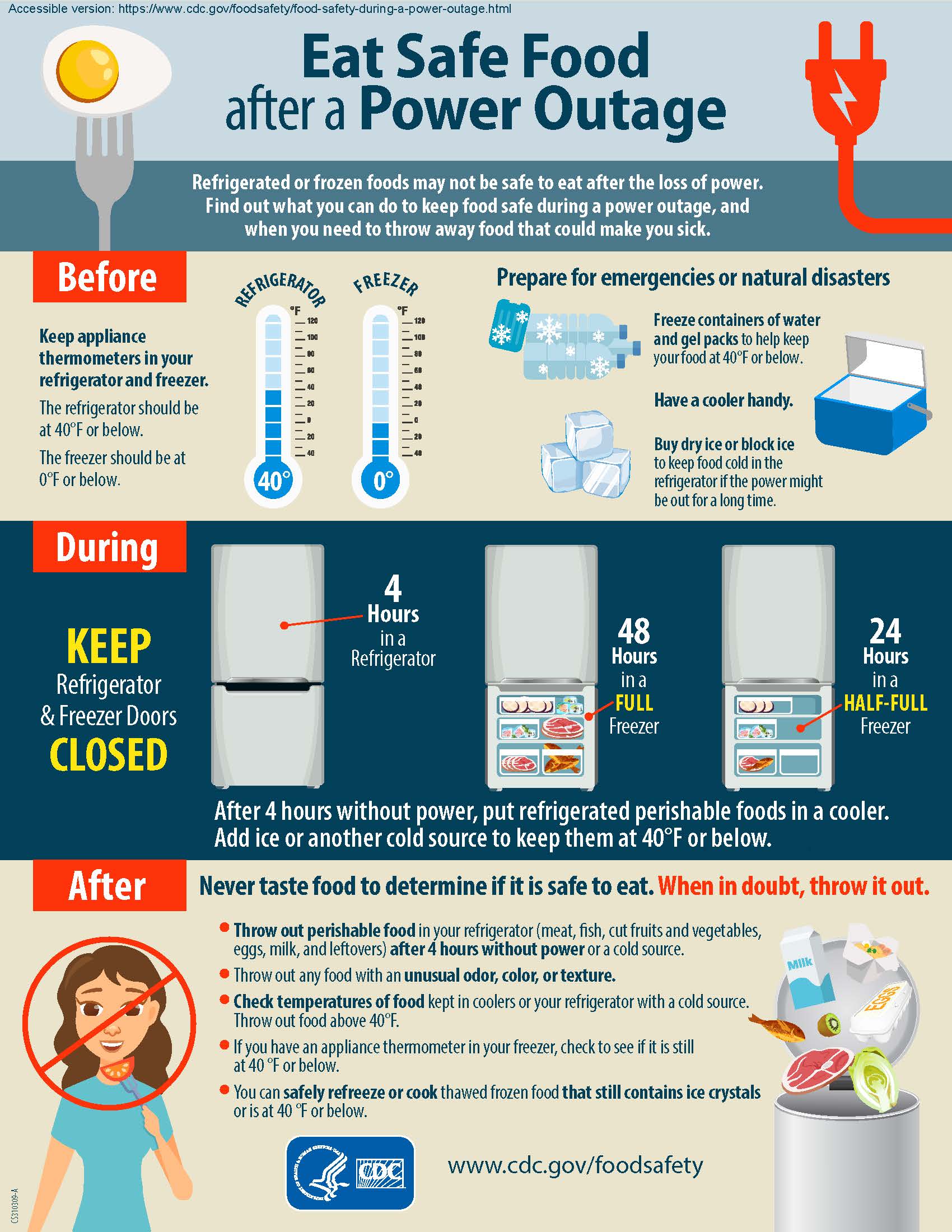
Did your food spoil during a power outage? You may be able to get reimbursed.
When the power goes out, the clock starts ticking on the food in your fridge and freezer.
If you keep the doors closed, refrigerated food can stay at safe temperatures for four hours. The things in your freezer will stay good for 24 to 48 hours. But once food reaches an internal temperature of 40 degrees Fahrenheit for more than two hours, it might be time to toss it.
Tens of thousands of Californians have lost power this week as a result of strong winds and drenching rains. With inflation and the rising cost of goods — $7 for a dozen eggs on average, if you can find them at all — losing a fridge full of food isn’t chump change.
Depending on your utility provider, you may be eligible for some form of reimbursement. Or you may be able to get your losses covered through your homeowners or renters insurance.
Getting reimbursed by the power company
Most Southern Californians are covered by Southern California Edison or San Diego Gas & Electric. In the city of Los Angeles, it’s the L.A. Department of Water and Power. All three utilities allow you to make claims for losses from a service interruption, but generally speaking, you’re eligible for reimbursement only if the loss of power is the provider’s fault.
From Utility Companies website “We are responsible for losses that occur due to our negligence. However, in many instances, we are NOT responsible for power outages, voltage fluctuations, food loss, or property damage that occur due to forces outside our control, such as earthquakes and weather-related conditions including wind, rain, fog, lightning, or extreme heat.” And in an FAQ, the L.A. DWP says, “Generally, we are responsible for losses that occur due to our negligence.”
In other words: A huge storm knocking out power lines probably won’t qualify.
For claims related to food loss, you’ll need to provide an itemized list of all the spoiled food, with receipts or other documentation of what everything cost. Here’s how to file a claim with Southern California Edison online, You can also call (800) 655-4555.
For the L.A. Department of Water and Power, you can submit a claim online, via regular mail, or by calling (213) 367-4600 or emailing [email protected].
Getting reimbursed by your insurance
Your renters or homeowners insurance could cover spoiled food, including losses incurred as a result of the weather. The precise coverage and steps for filing a claim will vary by insurer; contact your insurance company’s customer service to find out what you need to do. You will probably need to provide supporting documentation such as photos and receipts or other proof of costs.
A post about renters insurance from comparison shopping website Policygenius notes that your renters policy only applies to the policyholder — so your food could be covered, but not your roommate’s.
Industry website Insurance Information Institute says to keep in mind that your losses may not exceed your deductible, so you might wind up paying out of pocket either way (though you’d at least be contributing toward your deductible). And in some cases, more claims could lead to higher premiums —”in the eyes of your insurance provider, a history of claims increases the chances you’ll file another one,” according to a post from LifeHacker, though a single claim over moldy food is very unlikely to be the sole cause of an increase.
Depending on your policy, you may be eligible to reimburse other expenses if you have to evacuate your home, or if you incur costs such as a hotel room or going out to eat because you couldn’t stay or cook at home due to storm damage. Check your individual policy for details.
Represent Your Community

FIRE! Be Ready! Tree Dangers

Sign-Up to Receive Agendas

Sylmar Community Calendar

MyLA311



My LA 311
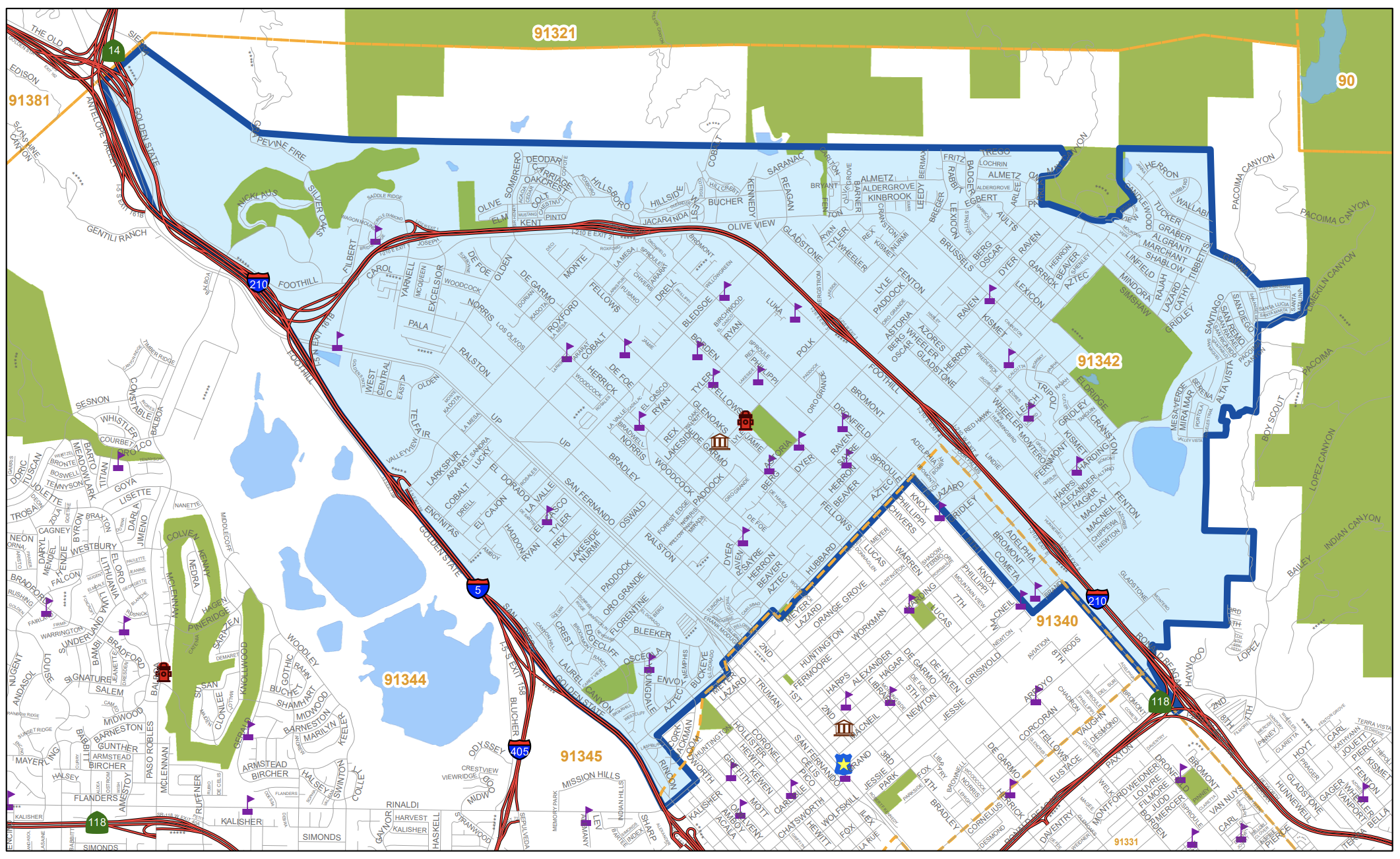
Area Boundaries and Map
View our neighborhood council boundaries for which we deal with.

EMPOWER LA

NEIGHBORHOOD COUNCIL CALENDAR & EVENTS
The public is invited to attend all meetings.

NEIGHBORHOOD COUNCIL FUNDING SYSTEM DASHBOARD

SUBSCRIBE TO NC MEETING NOTIFICATION